The Hidden Tax on Every Construction Project
Rework is construction's most expensive and least visible problem. While schedule delays and budget overruns make headlines, rework is often the root cause behind both — silently consuming resources, extending timelines, and eroding margins.
The numbers are staggering. Research from the Construction Industry Institute puts direct rework costs at 5–20% of total contract value on typical projects. When indirect costs are included — schedule delays, crew redeployment, material waste, and client disputes — that figure can reach 30% or more.
Yet most rework is preventable. Studies consistently show that the majority of construction defects stem from three sources:
- Late detection — issues found weeks after the work was completed
- Poor communication — instructions lost between design, management, and field teams
- Inadequate documentation — no clear record of what was inspected, when, and by whom
Every one of these root causes is a data problem. And data problems are exactly what AI agents in construction are built to solve.
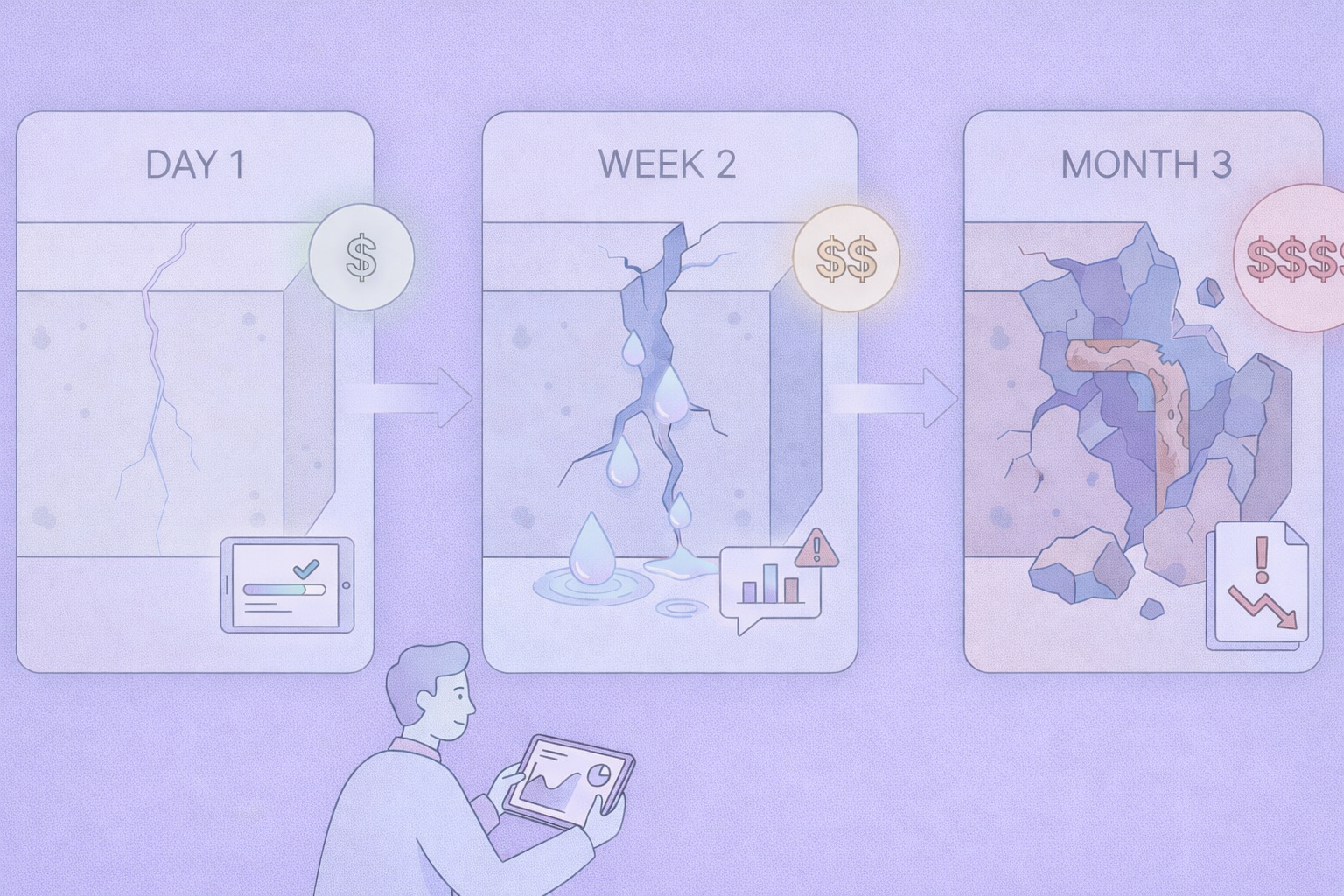
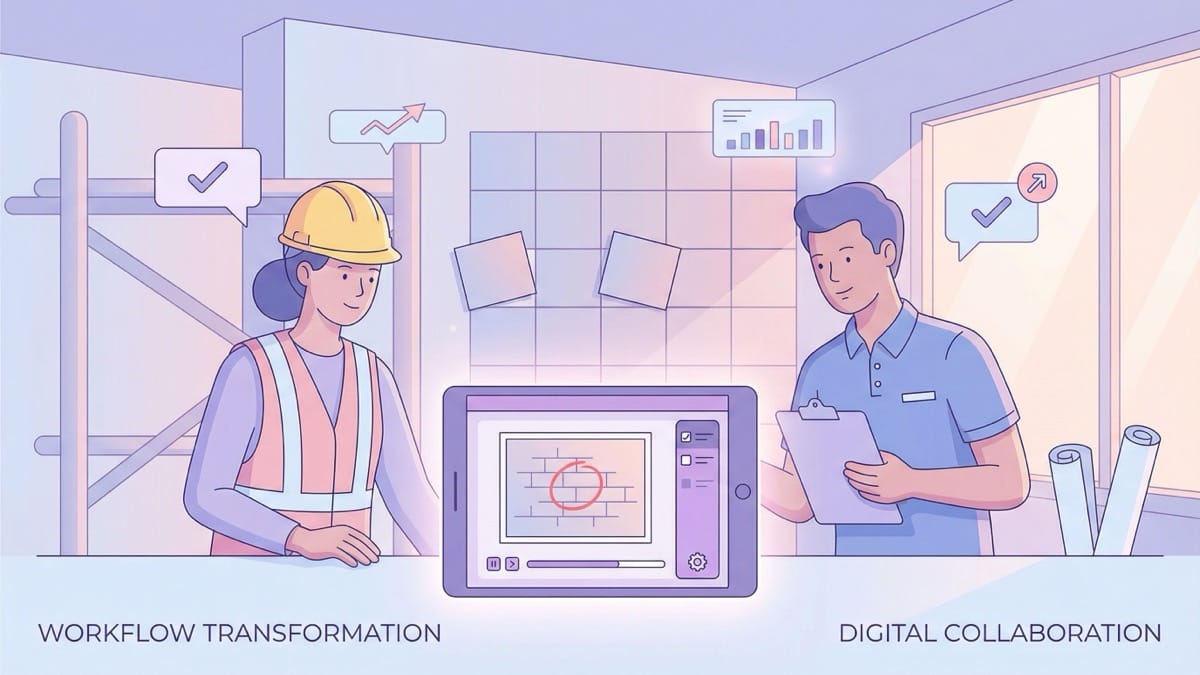 How Small Defects Compound Into Major Rework Costs
Why Defects Get Caught Too Late
On a traditional construction site, quality control follows a periodic inspection model. A QA inspector visits the site, checks completed work against drawings, fills out forms, and submits a report. This process has three fundamental weaknesses:
1. Inspections Are Snapshots, Not Streams
An inspector might visit a zone once a week. Between visits, work continues — and defects accumulate. A misaligned formwork issue on Monday that could have been fixed in 20 minutes becomes a structural rework item by Friday's inspection, costing days of labour and materials.
2. Reports Travel Slowly
Even after an inspection identifies a defect, the information has to travel through reporting chains: inspector → QA manager → project manager → subcontractor. Each handoff adds delay. According to PlanGrid's Construction Disconnected report, construction professionals spend 35% of their time on non-productive activities including looking for project information and resolving issues caused by poor data.
3. Documentation Gaps Create Disputes
When defects are found but not documented properly — or documented weeks after the fact — they become sources of claims and disputes. Who did the work? When was it inspected? Was the issue raised before the concrete was poured? Without timestamped, structured records, these questions turn into costly legal arguments.
How AI Agents Catch Defects at the Point of Capture
AI agents for construction quality management work on a fundamentally different model: continuous, automatic, and immediate.
Instead of waiting for scheduled inspections, AI agents process the data that workers are already generating — photos, messages, and daily updates — and flag quality issues in real time.
Photo-Based Defect Detection
When a worker photographs completed work and shares it via WhatsApp, the AI agent analyses the image automatically. Using computer vision trained on construction-specific defect patterns, it can identify:
- Surface defects: Cracks, honeycombing, spalling in concrete
- Alignment issues: Misaligned formwork, uneven finishes, deviations from spec
- Missing elements: Absent reinforcement, incomplete waterproofing, missing fixings
- Safety hazards: Exposed rebar, unsecured materials, trip hazards
The defect is flagged, categorised by severity, and routed to the responsible party — all within minutes of the photo being taken. This is the same WhatsApp-native approach that Wenti Labs uses across all its construction AI workflows.
Automated QA Documentation
Every photo, message, and defect flag is automatically logged into a structured QA trail. Each entry includes:
- Timestamp and geolocation
- Classification (defect type, severity, zone)
- Responsible party
- Resolution status and follow-up
This creates an audit-ready compliance record that's generated passively — without anyone filling in forms or uploading files to a separate system.
 AI-Powered Defect Detection and Documentation Flow
The Economics of Early Detection
The cost difference between early and late defect detection is dramatic. Industry data consistently shows an exponential cost curve:
- Defect caught during work: Fix cost = 1x (minimal labour, no material waste)
- Defect caught at inspection (days later): Fix cost = 5–10x (partial rework, schedule impact)
- Defect caught after handover: Fix cost = 30–100x (full rework, legal costs, reputation damage)
The UK's Get It Right Initiative — an industry body focused on reducing construction error — found that over 50% of construction defects could be prevented with better real-time information sharing. That's not a technology gap. It's a data flow gap.
AI agents in construction close this gap by ensuring that defect data flows from the point of capture to the point of decision in minutes, not days.
A Practical Example
Consider a concrete pour on a high-rise project:
Without AI agents:
- Formwork is installed with a minor alignment deviation
- Concrete is poured over the misaligned section
- QA inspector visits 3 days later, identifies the issue
- Section must be demolished and repoured — 4 days of rework, material waste, schedule delay
With AI agents:
- Worker photographs formwork as part of normal progress documentation
- AI agent analyses photo, detects alignment deviation within minutes
- Supervisor is alerted immediately via WhatsApp
- Formwork is adjusted before concrete pour — 30 minutes, zero rework
The same defect. The difference is when it's caught — and that timing is determined by whether data flows in real time or in batch reports.
Beyond Detection: Building a Quality Culture
The impact of AI agents on construction quality goes beyond catching individual defects. When teams know that every photo is being analysed and every issue is being tracked, behaviour changes:
- Subcontractors self-check more carefully before submitting work
- Site managers get visibility into quality trends across zones and trades
- Project managers can identify which subcontractors or zones have recurring issues
- Clients gain confidence from transparent, real-time quality data
This shifts quality management from a policing function to a collaborative one. Instead of adversarial inspections, teams work together with a shared, real-time view of quality status.
This cultural shift is one of the most underappreciated benefits of deploying agentic AI in construction. The technology doesn't just catch problems — it prevents them by changing incentives.
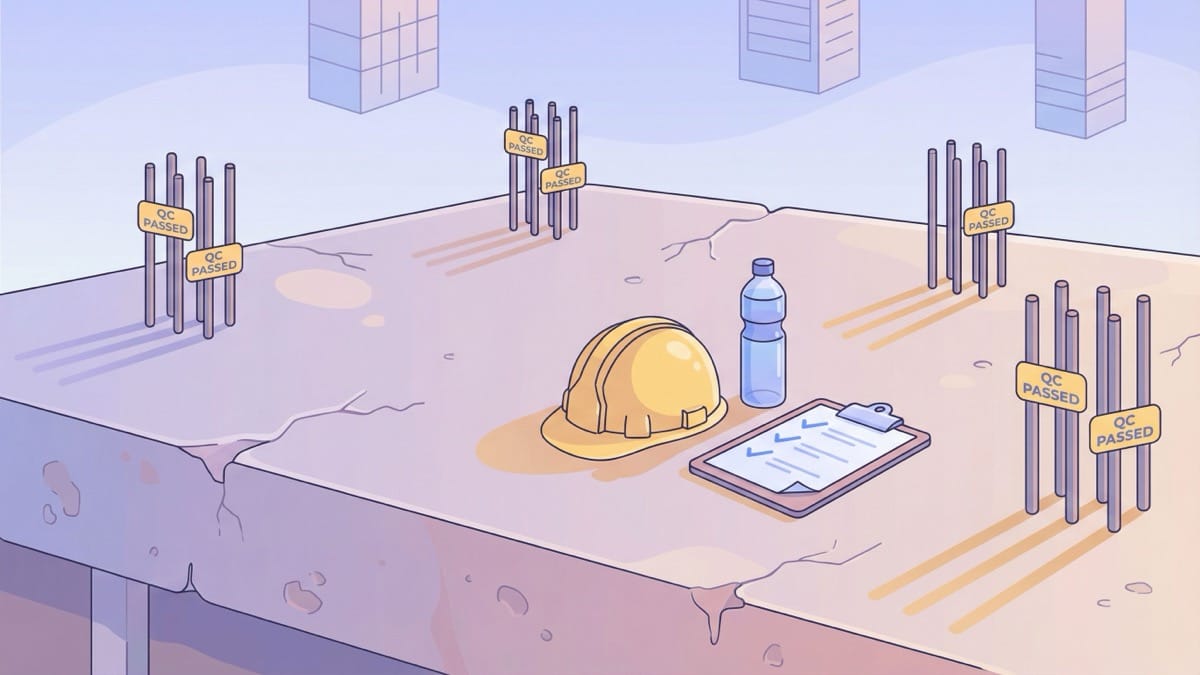 From Reactive Inspections to Proactive Quality Culture
What Wenti Labs Delivers
At Wenti Labs, our AI agents for construction quality management are purpose-built for the realities of job sites:
- WhatsApp-native — workers share photos as they normally would; AI does the rest
- Real-time defect flagging — issues identified within minutes, not days
- Automated QA trails — every entry timestamped, classified, and audit-ready
- Severity routing — critical defects escalated immediately; minor issues logged for review
- Trend analytics — dashboards showing defect patterns by zone, trade, and time period
The result: fewer defects reaching the rework stage, faster resolution when they do, and a compliance documentation trail that's generated without any additional effort from field teams.
Construction projects that catch defects early don't just save money — they finish faster, have fewer disputes, and build stronger client relationships. That's the real ROI of AI agents in construction quality management.
Getting Started
If rework is eating into your project margins, or if QA documentation is always created after the fact, AI agents can change this immediately — using the tools your team already has.
Talk to us about deploying AI-powered quality management, or explore our case studies to see real results from active construction sites.
Part of our series on AI agents in construction. See also: What Is Agentic AI in Construction? and AI Agents for Construction Progress Tracking.