What AI-Driven Progress Tracking Means for Construction Teams in 2026
Construction teams have talked about "real-time progress visibility" for years. In practice, most projects still run on delayed updates, fragmented records, and reporting workflows that depend on someone manually cleaning up what already happened.
What is changing in 2026 is not that construction suddenly has more data. The shift is that AI is becoming more useful at turning messy site activity into structured progress signals fast enough to influence decisions.
That distinction matters. A prettier dashboard does not solve progress tracking. Better progress tracking comes from reducing the time between work happening on site and decision-makers understanding what changed.
Why This Topic Matters Now
Autodesk's February 5, 2026 roundup of AI construction trends points to a market that has moved beyond pure hype. The article notes that AI remains top of mind for construction leaders, and that early adopters are already using it to analyze more variables, move faster during planning, and reduce manual work. At the same time, Autodesk reports that only 32% of construction leaders say they have met or are close to meeting their AI goals, which is a useful reality check: interest is high, but execution is still uneven.
That makes progress tracking one of the most practical places to look. It is a daily operational problem, not a speculative future bet. If AI cannot help a team understand whether a package is moving, slipping, or blocked, then the rest of the transformation story is probably not mature either.
This is also where the industry conversation has become more concrete. In the same Autodesk piece, multiple contributors describe AI as something that will help project teams summarize information faster, surface schedule or cost risks earlier, and reduce the time spent processing data rather than making decisions. That is a direct description of the progress-reporting bottleneck many project teams already feel every week.
The Old Problem: Progress Data Arrives Too Late
Traditional progress tracking breaks down in predictable ways:
- field teams capture updates in photos, chat messages, notebooks, and verbal handovers
- supervisors consolidate updates at the end of the shift or end of the week
- project staff reformat the information into reports for management, consultants, or clients
- the report lands after the most useful decision window has already passed
The core failure is not that workers refuse to report. It is that the reporting layer sits too far away from the work itself.
This is one reason so much construction technology underperforms. The system may be capable, but the data only becomes usable after too many manual handoffs. We have already written about this in Why Most Construction Tech Fails and What Real Progress Data Looks Like: the industry is not short on inputs, it is short on timely, structured, decision-ready information.
In progress tracking, that delay shows up as:
- schedule slippage discovered after crews have already moved on
- missed opportunities to rebalance labour or materials earlier
- disputes around percentage completion
- client updates that feel retrospective rather than operational
What Is Actually Changing in 2026
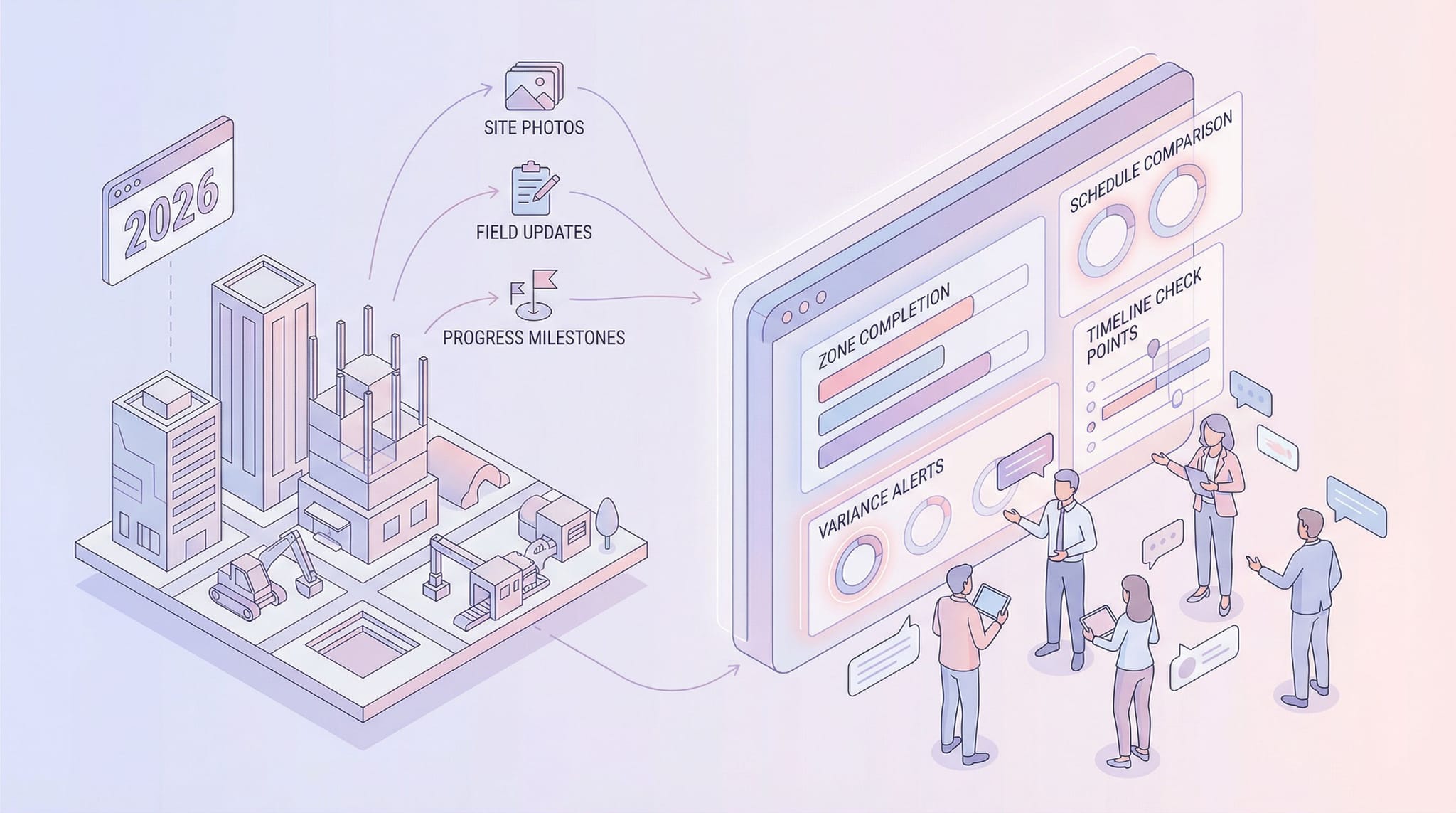
The 2026 shift is not simply "AI writes reports now." The more important change is that AI is becoming better at connecting multiple forms of project context.
Autodesk's 2026 trends article highlights three developments that matter directly for progress tracking:
- AI is becoming embedded in everyday project management rather than operating as a separate novelty tool.
- Teams are using AI to identify schedule impacts and risk signals earlier.
- Spatial and visual context are becoming more important, which helps narrow the gap between what a schedule says and what the site actually shows.
That third point is especially important. One of the expert contributions in Autodesk's article argues that many AI systems can optimize a plan on paper but still fail in the field because they are not grounded in what is physically happening on site. In other words, progress tracking gets much more useful when AI can reconcile digital intent with physical reality.
Trimble makes a related point in its article on how AI is transforming the built environment. Their argument is that one of the industry's biggest constraints is trapped and fragmented data, and that AI can help organize data behind the scenes without forcing every team into one rigid working method. That is highly relevant to progress tracking because field progress rarely arrives in one clean format. It arrives through photos, messages, inspections, drawings, schedules, scans, and updates from multiple parties.
Taken together, those signals suggest that AI-driven progress tracking in 2026 is less about a single dashboard feature and more about a connected operational layer that can:
- understand field updates faster
- map those updates to schedule context
- detect exceptions earlier
- reduce the admin burden required to keep reports current
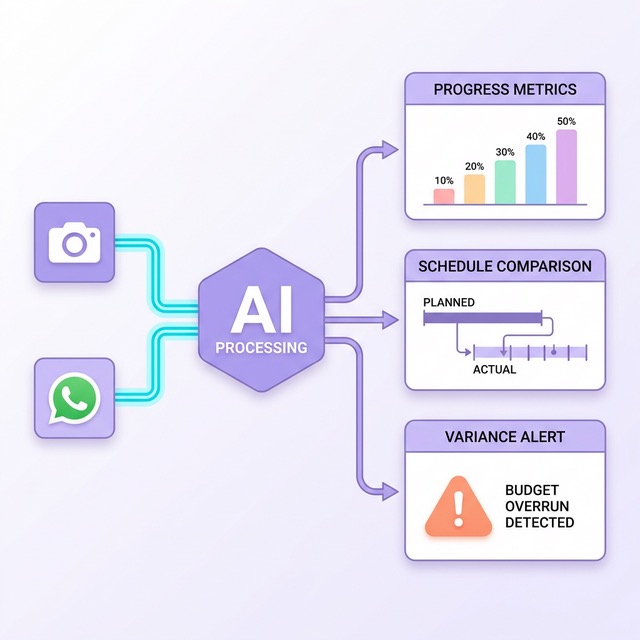 A practical progress-tracking flow: capture, structure, compare, and act.
From Reporting to Verification
This is the most useful way to think about the shift.
Older progress workflows are mostly descriptive. Someone explains what happened. A manager interprets it. A report summarizes it. The process is labor-intensive and often inconsistent.
The more mature 2026 model is verification-oriented:
- site evidence is captured continuously
- AI structures the evidence
- the system compares actual field signals against planned work
- teams focus their attention on deviations, risks, and decisions
That does not eliminate human judgment. It makes human judgment more timely.
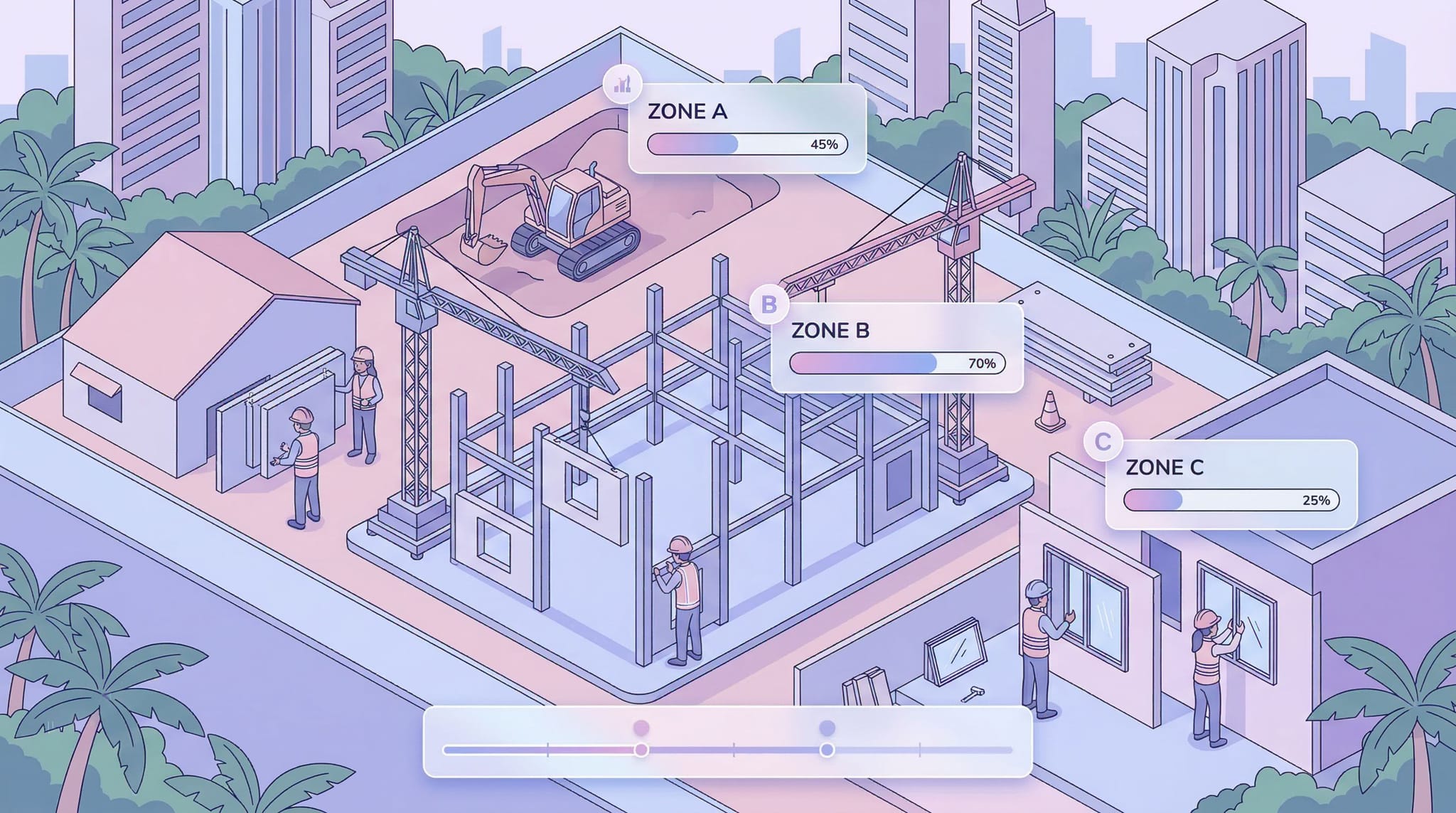
For example, instead of waiting for a weekly progress report to reveal that a zone is behind, a project team can see that:
- expected work packages have not been evidenced by the end of the shift
- field messages indicate dependency issues
- installed quantities or visible milestones are not aligning with the baseline plan
- a likely variance is emerging before it becomes a formal delay narrative
That is a very different operating model from simply producing a cleaner PDF every Friday.
What Real-Time Progress Tracking Looks Like in Practice
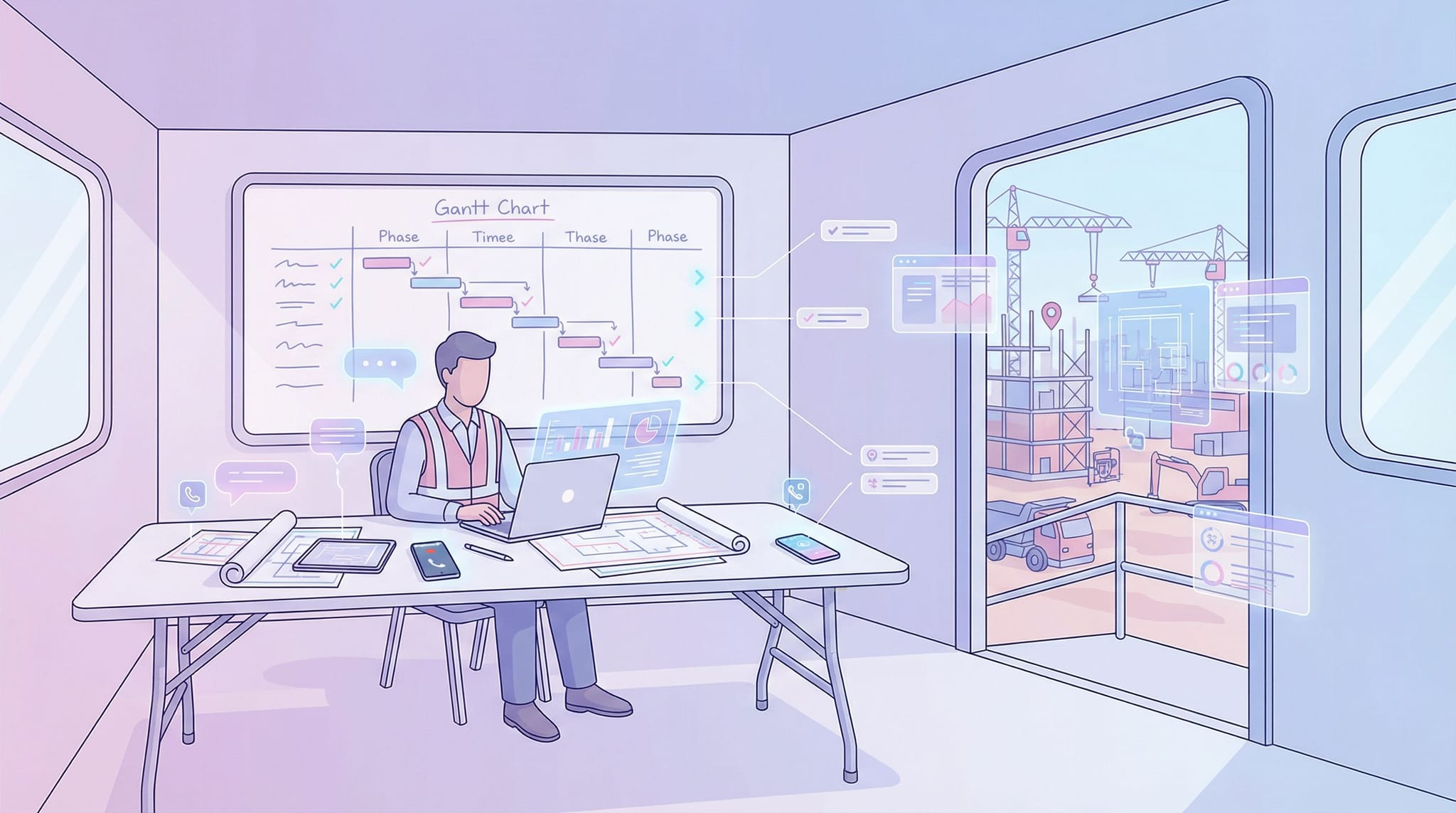
In practical terms, AI-driven progress tracking becomes valuable when it fits how construction teams already work.
In practice, the strongest setups usually include:
- site photos being used as progress evidence
- daily chat updates being parsed into structured records
- progress observations being tied to zones, trades, or work packages
- exceptions being surfaced automatically when actual conditions diverge from plan
- management views updating continuously instead of only at report time
This is why the strongest use cases are usually not "replace the scheduler" use cases. They are workflow-adjacent use cases that reduce the friction between field activity and project visibility.
At Wenti Labs, that is the most credible angle for us as well. We are not trying to persuade site teams to spend more time typing into another system. We are focused on turning the updates they already generate into usable reporting inputs. That is consistent with the same logic behind our existing article on AI Agents for Construction Progress Tracking: From Site Photos to Real-Time Reports, but the 2026 framing is more specific: the market is now moving from isolated pilots toward more grounded, workflow-embedded deployment.
What Leaders Should Measure
If a construction team wants to evaluate whether AI-driven progress tracking is actually working, the KPI should not just be "does the dashboard look better?"
More useful operational metrics include:
1. Reporting Latency
How long does it take for a site event to appear in a progress view that a decision-maker can act on?
If the answer is still measured in days, the workflow has not improved enough.
2. Data Coverage
What percentage of critical work packages receive timely, structured progress evidence?
Progress tracking fails when only a small subset of the work is visible.
3. Exception Detection
How early are schedule deviations, blockers, or missing updates being flagged?
The value of AI is often less about summarizing completed work and more about catching weak signals earlier.
4. Administrative Load
How much manual effort is still required to transform field updates into management reporting?
If AI does not materially reduce admin effort, adoption will stay fragile.
5. Action-to-Resolution Cycle
Once a variance is detected, how quickly can the team respond and verify the response?
That is where progress tracking becomes a management system rather than a reporting task.
For teams reviewing vendors or pilots, the simplest scorecard is:
How fast does site evidence become usable progress data?How much manual admin is removed from weekly reporting?How early are schedule risks surfaced?How clearly can the team trace a reported status back to field evidence?
Where Wenti Labs Fits
Wenti's strongest position in this conversation is not generic "AI for construction." It is a more specific claim:
progress visibility improves when AI works inside the communication and documentation habits teams already have.
That means:
- extracting structured updates from WhatsApp and field communications
- turning photos into usable progress evidence
- reducing the delay between site activity and management visibility
- creating cleaner data for reporting, QA/QC, and downstream analysis
More concretely, the Wenti angle is strongest when progress tracking is tied to workflows teams already run every day:
- daily site updates from supervisors
- photo capture from the field
- status summaries for management and clients
- exception flags when expected evidence does not match planned progress
This also aligns closely with How AI Agents on WhatsApp Are Changing Construction Workflows and What Is Agentic AI in Construction?. The differentiated Wenti position is not just that AI can analyze data. It is that AI can make fragmented field behavior legible without asking teams to change how they work first.
The Bottom Line
AI-driven progress tracking in 2026 should not be read as "construction reporting is fully automated now." That would be overstated.
The more defensible claim is that the best teams are beginning to shorten the distance between what happens on site and what leadership can understand in time to act.
That is a meaningful shift. It reduces reporting lag. It improves schedule awareness. It creates earlier interventions. And it gives project teams a more realistic path to operational visibility than forcing another layer of manual admin.
For construction firms, the question is no longer whether AI can support progress tracking in principle. The better question is whether your current workflow allows field evidence, schedule context, and decision-making to connect fast enough to matter.
If the answer is still no, then that is where the next layer of improvement should start.
If you want to see how this can work in practice, explore Wenti Labs' related posts on progress tracking, workflow-native adoption, and WhatsApp-based AI workflows.
Source Checklist
- Autodesk 2026 AI construction trends: https://www.autodesk.com/blogs/construction/2026-ai-trends-25-experts-share-insights/
- Trimble AI in the built environment: https://www.trimble.com/blog/construction/en-US/article/ai-transforming-built-environment
Internal Links Added
/blog/post/ai-agents-construction-progress-tracking//blog/post/why-most-construction-tech-fails-and-what-real-progress-data-looks-like//blog/post/whatsapp-ai-agents-construction-workflows//blog/post/what-is-agentic-ai-in-construction/
CTA
Tie this article to Wenti's progress-tracking and reporting workflows.